Our Work
Systems we've built for real businesses. Case studies are marked as cases; everything else is client work.
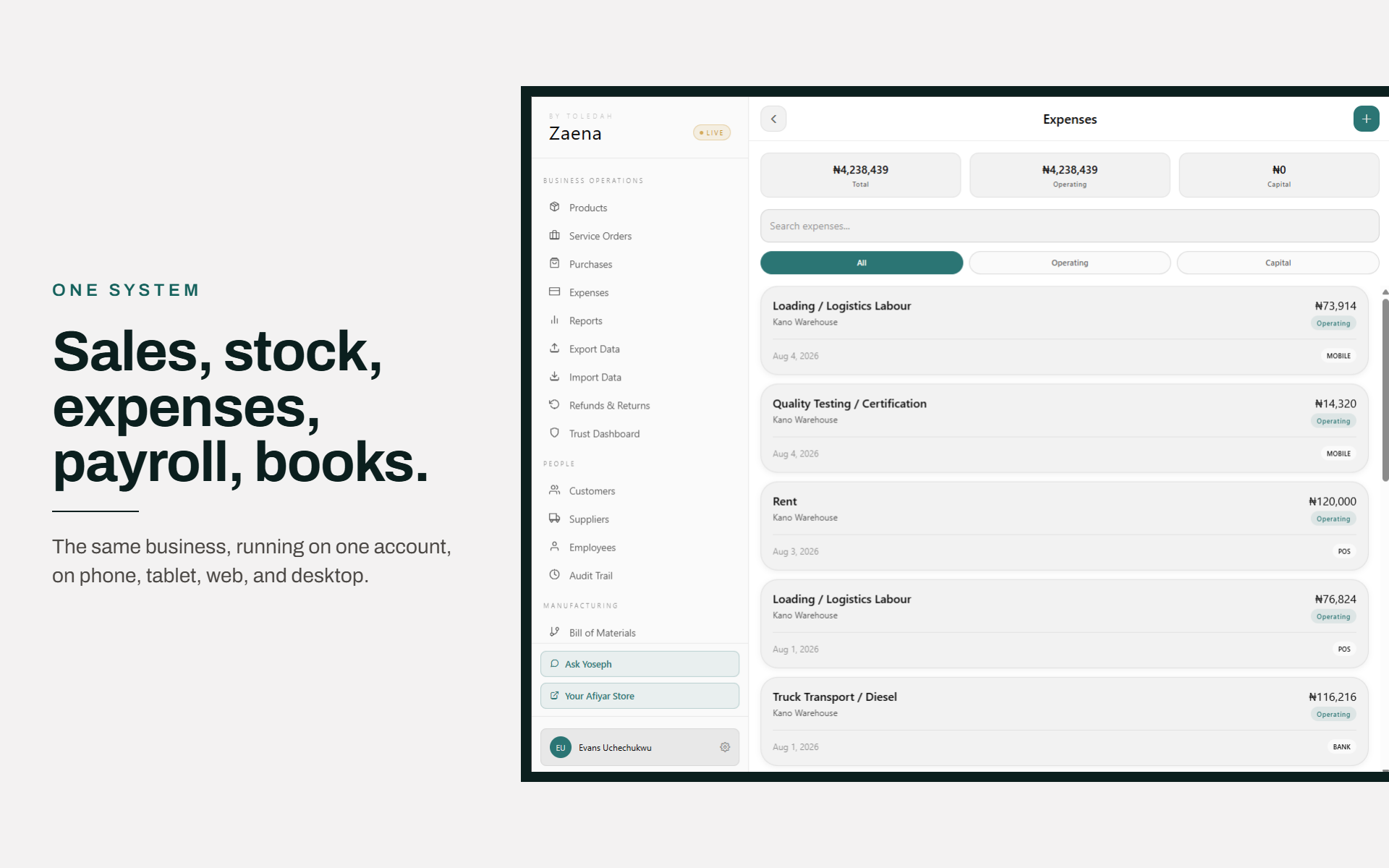
Zaena
Businesses need one place to manage sales, stock, money and people.
A mobile first business management system with offline operation, accounting, reporting and auditability.

Adaeze Glam Studio
Bridal & editorial makeup artistry


Afiyar
Businesses need a better way for potential customers to discover their products and take action.
A dedicated storefront with service listings, pricing, a social media post maker, booking and WhatsApp conversion.
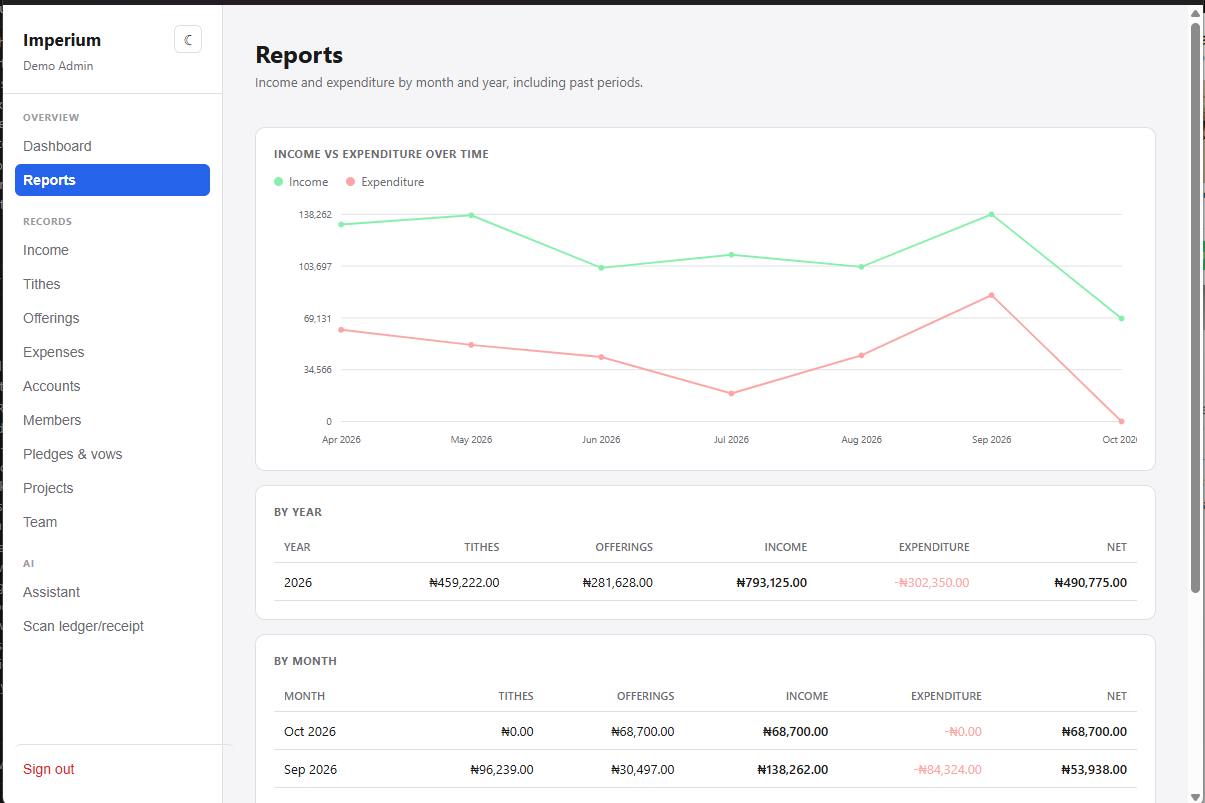
Replacing spreadsheets with a financial system built for the church
Imperium Ministries kept a well organized financial ledger, but it was entirely manual. Every bit of income and expense had to be entered once in the ledger and reconciled again in a separate monthly summary, and any gap between the recorded balance and the cash on hand had to be found and corrected by hand.
A desktop financial system that replaces the manual reconciliation entirely. Every entry updates account balances and monthly and yearly totals automatically, the moment it's recorded, so there is no second summary to keep in sync and no drift to track down. It includes an AI assistant that runs locally on the church's own computer, so financial data never has to reach an outside AI provider.

Should an EdTech Platform Raise Its Prices?
How quantitative pricing analysis identified a 36.7% contribution opportunity without simply raising the headline price
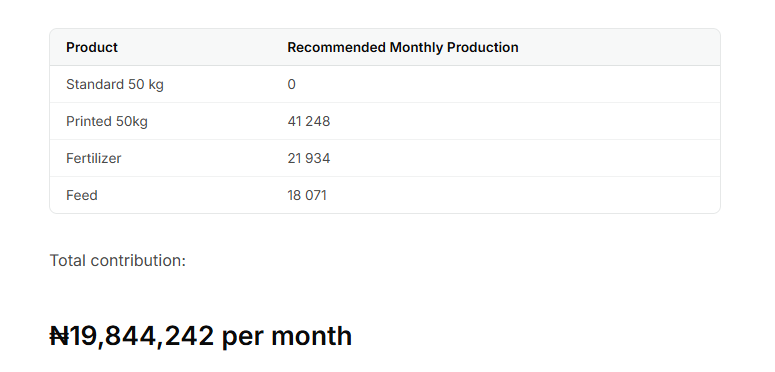
Why the Most Profitable Product Isn’t Always the Best Product to Make
Consider a Nigerian woven-packaging manufacturer producing four types of bags: Standard 50kg rice sacks Printed 50kg rice sacks Fertilizer bags Animal-feed bags Each product earns a different contribution per bag. Each also consumes different amounts of the factory's scarce resources. The management problem is therefore not simply: “Which product makes the most money?” but, “Given the resources we have available, what combination of products produces the greatest total contribution?”
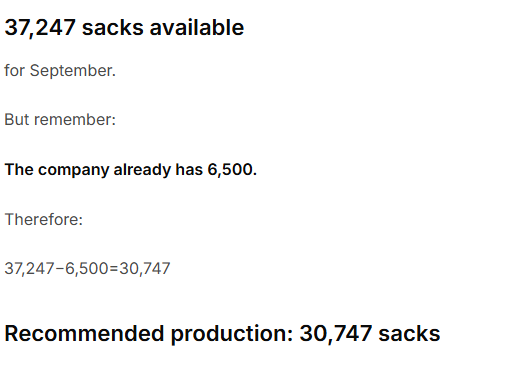
How Much Should a Manufacturer Produce When Future Demand Is Uncertain?
A PP woven sack manufacturer had to decide how much to produce for September. The forecast was only the beginning of the analysis.
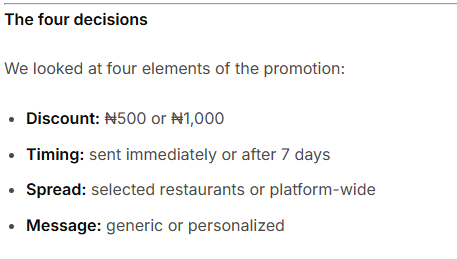
How Do I Know Which Promotion Will Actually Make Me Money?
A customer promotion experiment revealed that the biggest discount wasn't the most profitable option.
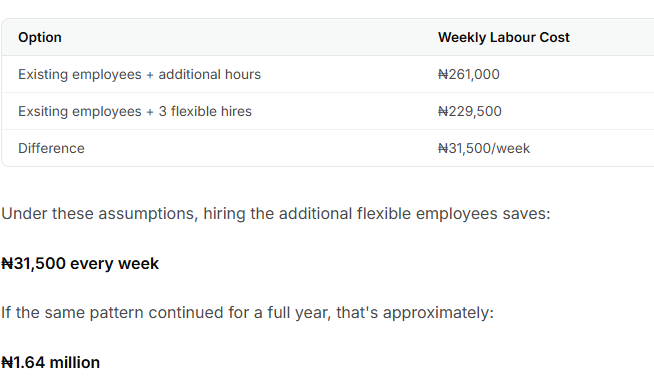
Should You Hire More Employees or Pay Your Existing Staff More?
A growing business eventually runs into an uncomfortable question: Do we need more people, or can the people we already have simply work more?
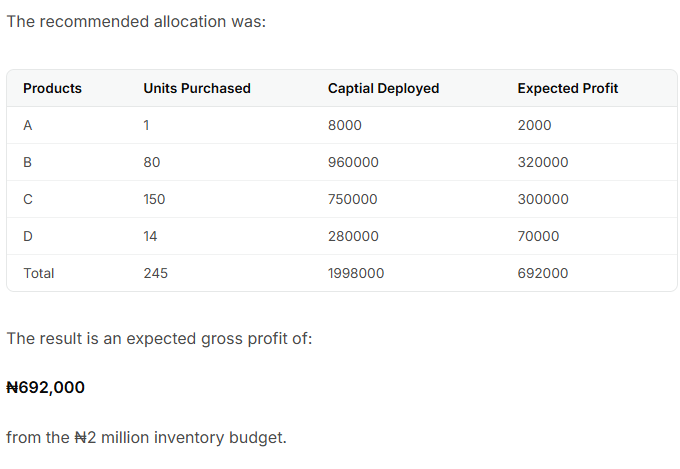
How Should a Distributor Spend ₦2 Million on Inventory?
A business owner has ₦2 million to restock. What should they buy?
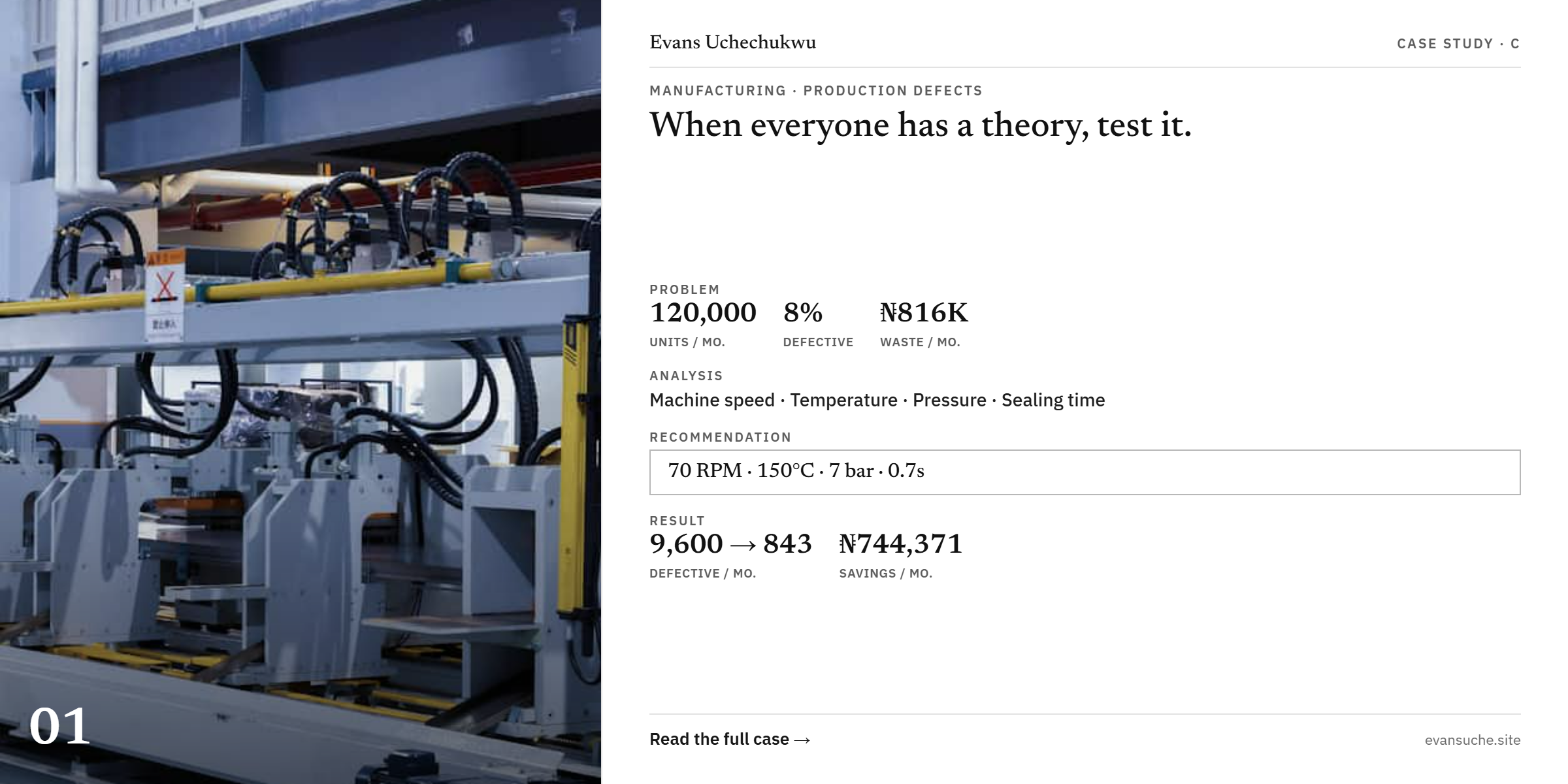
When Everyone Has a Theory, Test It. (How a manufacturer can use experimental data to find the real cause of production defects)
A manufacturer produces about 120,000 units every month. Recently, something has gone wrong. The percentage of defective products has risen to around 8%. At that rate, approximately 9,600 units are being rejected every month. At an estimated cost of ₦85 per defective unit, that represents roughly ₦816,000 in direct monthly waste before considering rework, delays, customer complaints and other consequences.