Best Accounting Software for Small Nigerian Businesses
Quick answer: For pure accounting depth and Nigerian tax compliance, including direct NRS e-invoicing integration, ZetaFisc is the strongest specialist option. For a business that wants real accounting built directly on top of daily sales and inventory operations rather than as a standalone finance tool, Zaena is a stronger fit. Sage suits more established businesses with a dedicated finance team, while Zoho offers the deepest global accounting features at the cost of Nigeria-specific localization.
Small business owners in Nigeria tend to reach for accounting software at one of two very different moments: either the business is growing complex enough to need real financial structure, or a lender, supplier, or tax obligation is demanding records the business doesn't currently have in a usable form. The right choice depends on which moment you're actually in.
## What Does "Real" Accounting Software Need to Do?
Genuine accounting software should give you a proper double-entry ledger, not just a running list of income and expenses, along with bank reconciliation, financial statements, income statement, balance sheet, cash flow, and Nigerian tax handling specific to VAT, WHT, and PAYE rather than a generic global tax framework with Nigeria added as an afterthought.
Increasingly, one more question matters as much as any of these: does the software actually integrate with Nigeria's NRS e-invoicing infrastructure, or does it only calculate the tax figures without connecting to the government system that processes them. Those are meaningfully different claims.
## How Do the Main Options Compare?
**ZetaFisc** is the most accounting-focused of the group, built specifically around Nigerian financial compliance, with full general ledger, trial balance, statutory payroll, and direct NRS e-invoicing integration. It is not built to be a retail POS system, so a business needing a strong till experience alongside its books will find that missing here.
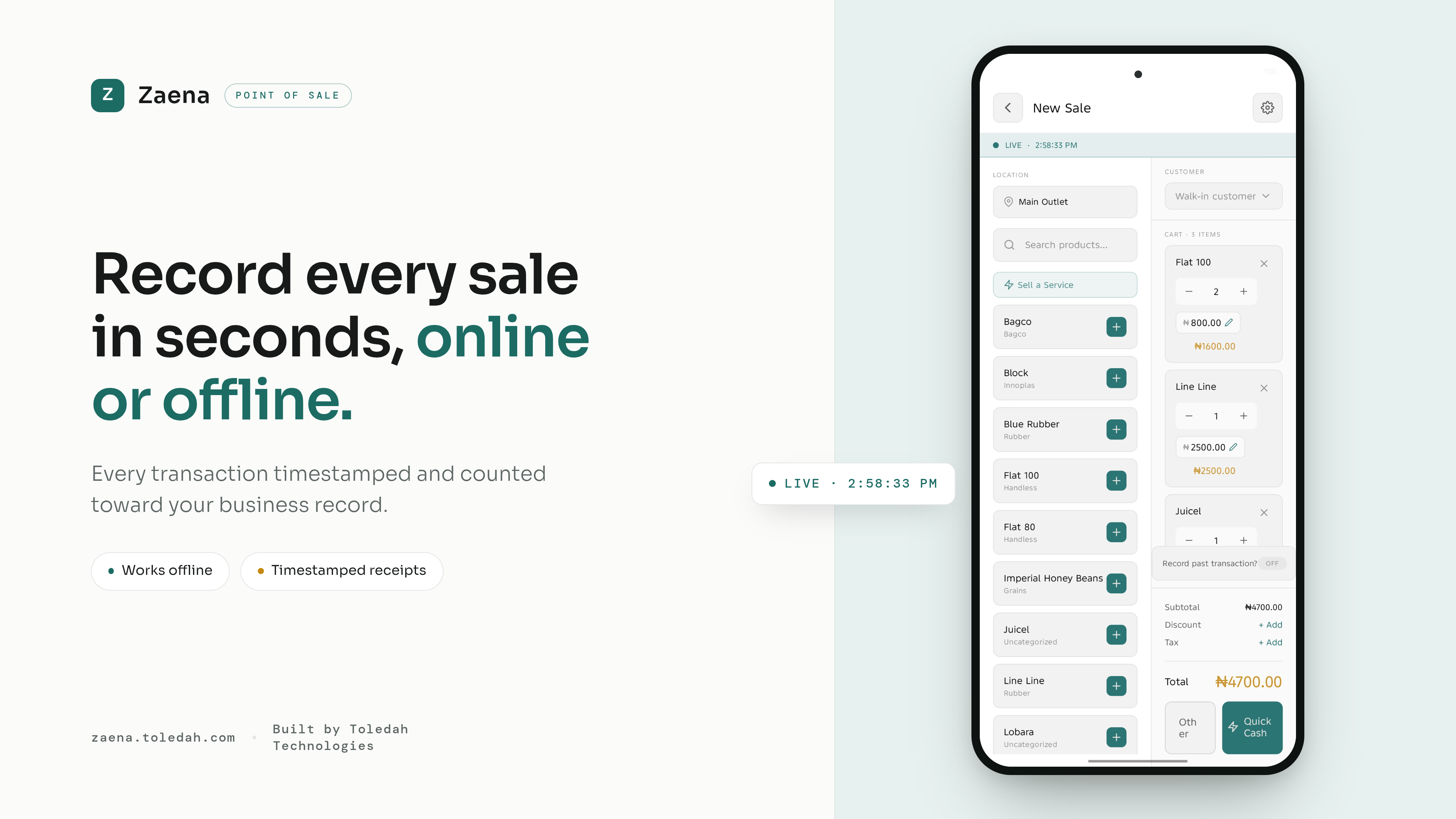
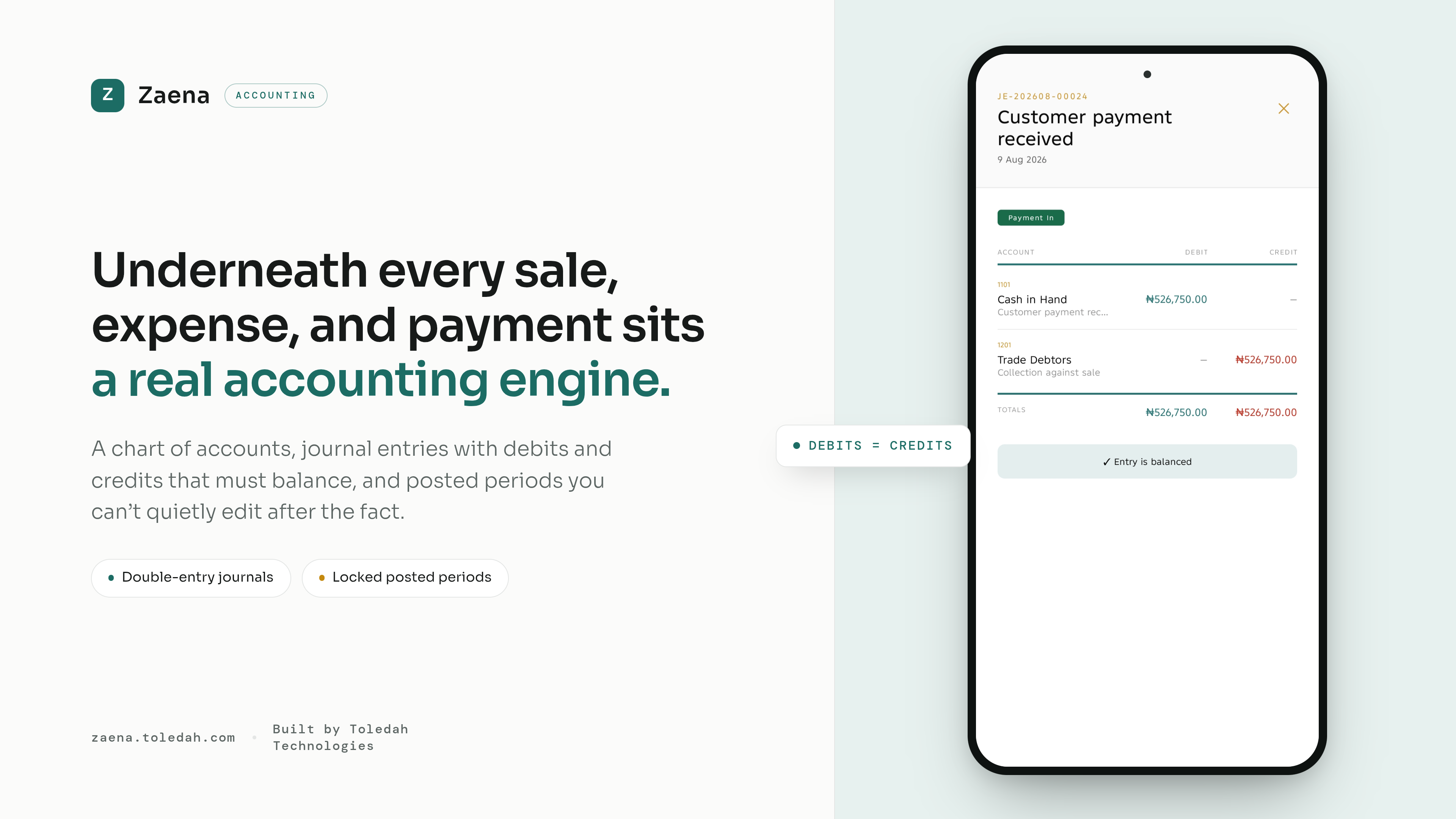
**Zaena** offers genuine double-entry accounting and Nigerian tax handling, generated directly from the sales, inventory, and payroll data the business is already recording day to day, rather than requiring a separate export from a sales system into a finance system. It won't out-specialize a dedicated accounting product like ZetaFisc on the deepest financial workflows, but for a business that wants its operational data and its books to be the same system, that tradeoff is often worth it.
**Sage** has a long history in African accounting specifically, and suits businesses with a finance team already in place wanting structured, formal reporting, though its pricing, starting around $12 a month for its base plan, is less Nigeria-first than ZetaFisc or Zaena.
**Zoho Books** is excellent as pure accounting software with a large integration ecosystem, but its strongest tax localization is built around markets like India, not Nigeria, so a business relying on it for Nigerian statutory compliance should verify the exact configuration with an accountant first.
## Which Should You Actually Choose?
If your business needs a finance team-grade ledger and direct NRS e-invoicing integration, and doesn't need a strong POS layer, ZetaFisc is the more specialized fit. If you want accounting that's generated directly from your daily sales and stock operations, without a separate finance system to reconcile against, Zaena is the stronger option. If you already have an established accounting relationship and want formal, structured reporting, Sage is worth considering, with the caveat that it is less Nigeria-specific than the two Nigerian-built options.
## Try It
Zaena generates real double-entry accounting and Nigerian tax reporting directly from the sales, inventory, and payroll you're already recording, so your books are never a separate system from your daily operations.
Check it via the link: https://toledah.com/zaena